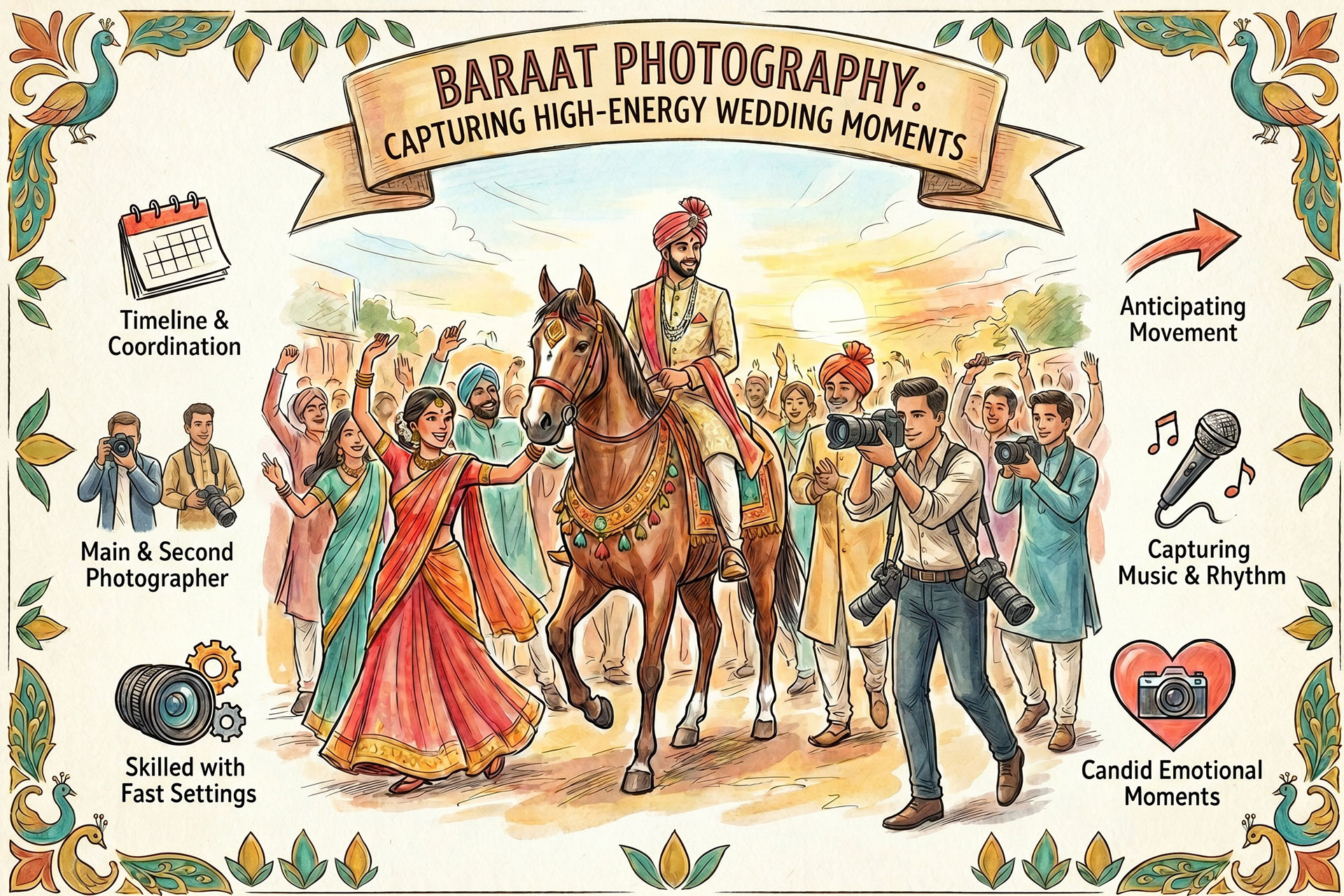

The baraat is one of the most vibrant and high-energy moments of an Indian wedding. With music, dancing, movement and celebration, it sets the tone for the entire event. For photographers, it is both exciting and challenging because moments unfold quickly and unpredictably.
Baraat photography is the art of capturing this energy, movement and emotion in a way that feels dynamic and authentic. It requires quick reflexes, creative framing and an understanding of how to work in constantly changing environments.
In simple terms, baraat photography focuses on documenting the groom’s procession with a mix of candid moments, movement shots and emotional highlights.
Unlike other wedding events, the baraat is not static. It is a moving celebration filled with dancing, music and spontaneous interactions.
This makes it one of the most important high energy wedding photography moments. Every second brings a new expression, gesture or interaction, making it essential for photographers to stay alert and adaptive.
The goal is not just to capture what is happening, but to capture how it feels.
Groom entry photography is a key part of the baraat. It focuses on the groom’s arrival, his expressions, and the reactions of family and friends.
Whether the groom arrives on a horse, in a car or walking with the procession, this moment carries both excitement and anticipation.
Capturing the groom’s expressions, interactions and reactions add depth to the overall wedding story.
When photographers think about how to capture baraat photos, they focus on movement, timing and positioning.
Staying slightly ahead or to the side of the procession allows for better framing. Shooting from different angles; wide, mid, and close, helps create a complete visual narrative.
It is also important to anticipate moments rather than react to them. Observing patterns in movement and crowd behavior helps capture key moments more effectively.
The best baraat photography tips focus on managing motion and capturing energy without losing clarity.
These techniques help balance sharpness with movement, creating visually engaging images.
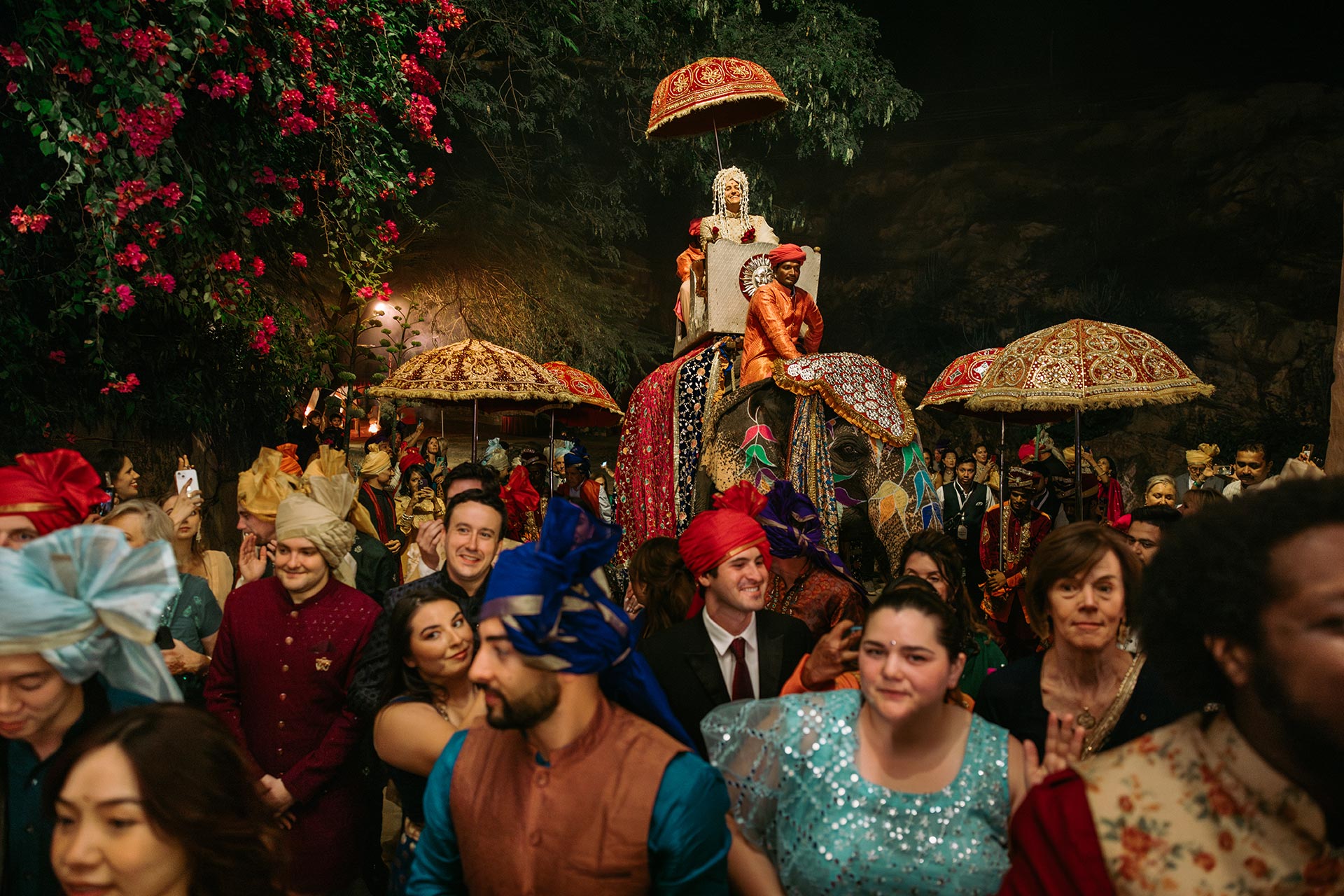
Candid Indian wedding procession photography plays a major role in documenting the baraat.
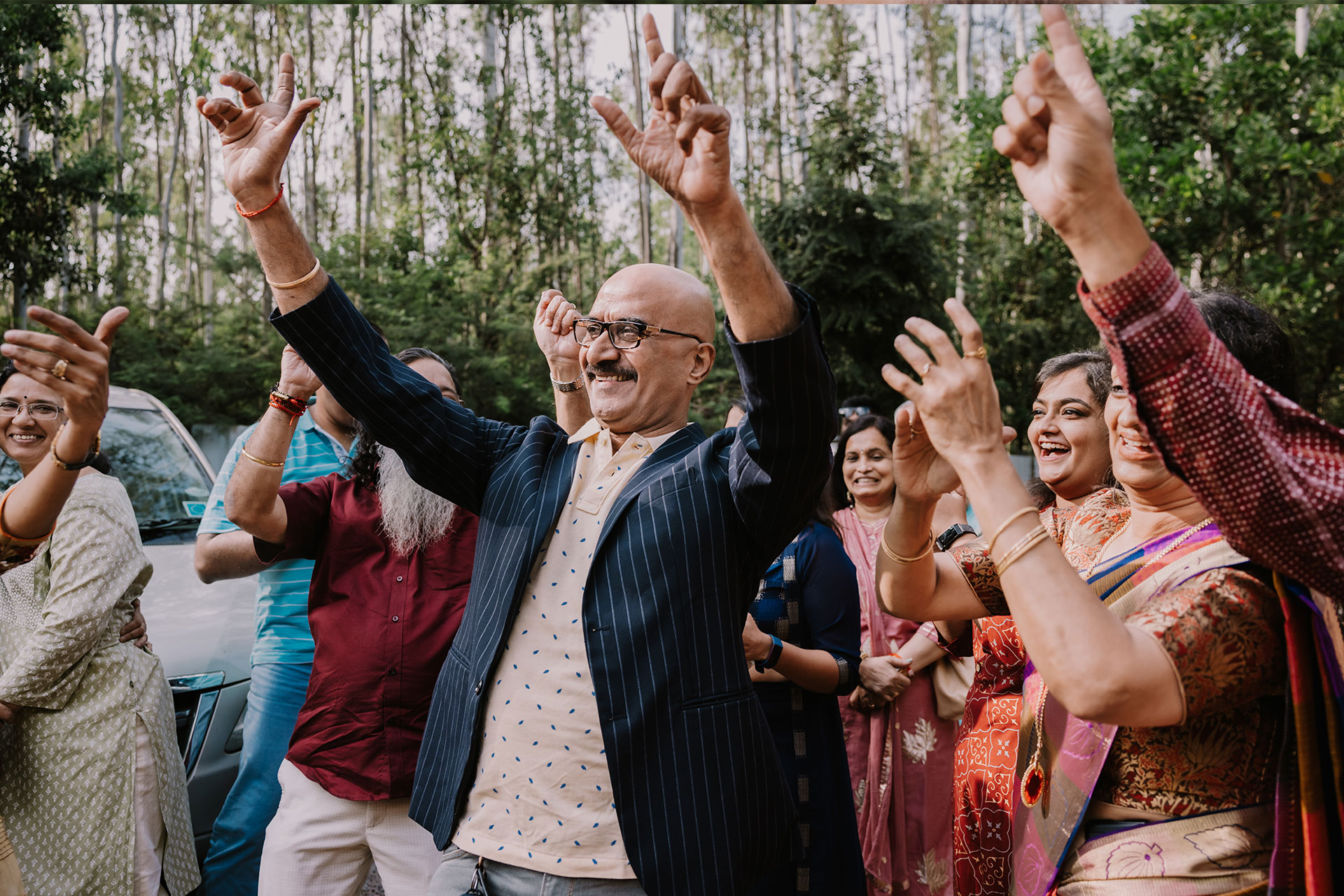
The most memorable images often come from unplanned moments like friends dancing wildly, family members cheering or the groom sharing a laugh with close relatives.
Photographers who focus on candid interactions rather than posed shots create images that feel genuine and emotionally rich.
Baraats often take place outdoors and may occur during the day or evening, which creates varying lighting conditions.
Daytime baraats may involve harsh sunlight, while evening baraats often include artificial lights, LEDs, or decorative lighting.
Photographers must adapt quickly by adjusting settings, positioning themselves strategically, and using available light creatively.
One of the biggest challenges in baraat photography is managing crowd movement.
The procession is constantly shifting, and space can be limited. Photographers need to move efficiently without interrupting the flow of the celebration.
Understanding crowd dynamics helps in predicting where key moments will happen and positioning accordingly.
Baraat photography is not just about individual shots. It is about creating a sequence that tells a story.
From the beginning of the procession to the groom’s arrival, each moment adds to the narrative. Wide shots establish the scene, mid shots capture interactions and close-ups highlight emotions.
This storytelling approach ensures that the energy and excitement of the baraat are preserved in the final album.
Experienced photographers often say that the best baraat photos are not the most perfect ones, but the most expressive ones.
A slightly imperfect frame with genuine emotion often has more impact than a perfectly composed but staged shot.
The key is to stay present, anticipate moments and embrace the unpredictability of the event.
Baraat photography is a blend of energy, movement and emotion. It requires technical skill, quick thinking, and an ability to capture moments as they unfold.
By understanding how to capture baraat photos, using the right techniques, and focusing on candid interactions, photographers can create images that truly reflect the spirit of the celebration.
When done right, baraat photography becomes one of the most exciting and memorable parts of the wedding story.
What is baraat photography?
Baraat photography focuses on capturing the groom’s procession, including dancing, cheering and high-energy celebrations during an Indian wedding.
What are the best baraat photography tips?
The best tips include using fast shutter speeds, capturing candid moments, staying mobile and shooting from multiple angles.
How do photographers capture movement in baraat photos?
Photographers use fast shutter speeds to freeze motion or controlled motion blur to creatively show movement and energy.
Why is candid photography important in baraat photography?
Candid photography captures real emotions and spontaneous interactions, making the images feel authentic and lively.